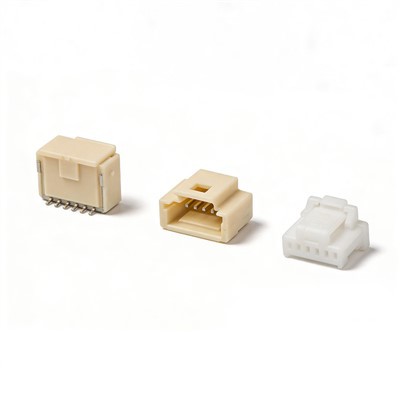
Hey there! As a supplier of electronic connectors, I often get asked about the test equipment used for these crucial components. Electronic connectors play a vital role in various electronic devices, ensuring reliable electrical connections. To make sure our connectors meet the highest quality standards, we use a bunch of different test equipment. Let’s dive into what they are and why they’re so important. Electronic Connector
1. Continuity Testers
First up, we’ve got continuity testers. These are like the basic detectives of the testing world. A continuity tester is a simple yet essential tool. It checks if there’s an unbroken path for electrical current to flow through the connector. You know, it’s like checking if a pipe is blocked or not. If there’s a break in the connection, the tester will let you know, usually by making a beep sound or lighting up an indicator.
We use continuity testers right from the production line. When we’re assembling connectors, we quickly run a continuity test to make sure all the pins and wires are properly connected. It’s a fast way to catch any obvious issues early on. For example, if a wire gets accidentally cut during the manufacturing process, the continuity tester will immediately show that there’s a problem.
2. Insulation Resistance Testers
Next on the list are insulation resistance testers. These are super important because they measure how well the insulation in the connector is doing its job. You see, the insulation around the electrical conductors in a connector is there to prevent current from leaking out. If the insulation resistance is too low, it could lead to short circuits, electrical interference, and all sorts of problems.
Insulation resistance testers work by applying a known voltage to the connector and then measuring the resulting current. Based on Ohm’s law (you know, V = IR), we can calculate the insulation resistance. We usually perform these tests under different environmental conditions, like high humidity or extreme temperatures, to make sure the connector can handle real – world situations. For instance, if a connector is going to be used in a humid environment, we want to make sure its insulation can still keep the current where it’s supposed to be.
3. Contact Resistance Testers
Contact resistance is another critical parameter for electronic connectors. Contact resistance testers are used to measure the resistance at the contact points of the connector. A high contact resistance can cause power losses, overheating, and signal degradation.
We use these testers to ensure that the contact surfaces of the connector are clean and properly mated. Over time, contact surfaces can get dirty or corroded, which can increase the contact resistance. By regularly testing the contact resistance, we can detect any issues early and take corrective actions, like cleaning or replacing the contacts. For example, in a high – frequency application, even a small increase in contact resistance can have a big impact on the signal quality.
4. Voltage and Current Testers
Voltage and current testers are also commonly used in testing electronic connectors. These testers help us verify that the connector can handle the specified voltage and current levels. We need to make sure that the connector won’t break down or overheat when it’s in use.
When testing voltage, we apply a known voltage to the connector and check if it can maintain the electrical connection without any arcing or breakdown. For current testing, we measure the current flowing through the connector under different load conditions. This helps us determine if the connector can handle the expected current without getting damaged. For example, in a power – delivery connector, we need to make sure it can handle the high current required to charge a device without any problems.
5. Environmental Chambers
Now, let’s talk about environmental chambers. These are like little artificial worlds where we can test how our connectors perform under different environmental conditions. We can control factors like temperature, humidity, and pressure inside the chamber.
By subjecting the connectors to extreme temperatures, high humidity, or rapid temperature changes, we can simulate real – world scenarios. For example, if a connector is going to be used in a car, it might have to withstand very high temperatures under the hood or very low temperatures in cold climates. By testing in an environmental chamber, we can make sure the connector will still work properly in these conditions.
6. Vibration and Shock Testers
Connectors also need to be able to withstand vibrations and shocks. That’s where vibration and shock testers come in. These testers simulate the vibrations and shocks that a connector might experience during its lifetime.
We use vibration testers to shake the connector at different frequencies and amplitudes. This helps us check if any of the internal components come loose or if the electrical connections are affected. Shock testers, on the other hand, apply sudden impacts to the connector to see if it can handle the stress. For example, in a mobile device, the connector might experience shocks when the device is dropped. By testing with these testers, we can ensure that our connectors are robust enough to handle such situations.
7. High – Frequency Test Equipment
For connectors used in high – frequency applications, like in telecommunications or data centers, we use specialized high – frequency test equipment. These include network analyzers, spectrum analyzers, and vector network analyzers.
Network analyzers are used to measure the scattering parameters (S – parameters) of the connector. S – parameters describe how the connector behaves at different frequencies, including its reflection and transmission characteristics. Spectrum analyzers help us analyze the frequency spectrum of the signals passing through the connector. Vector network analyzers are more advanced and can provide detailed information about the complex impedance and phase characteristics of the connector.
Why These Tests Matter
All these tests are crucial for ensuring the quality and reliability of our electronic connectors. In today’s world, electronic devices are everywhere, and they rely on high – quality connectors to function properly. Whether it’s a smartphone, a car, or a computer, a faulty connector can lead to all sorts of problems, from minor glitches to complete system failures.
By using these test equipment, we can catch any potential issues early in the production process. This not only helps us maintain a high level of quality but also saves time and money in the long run. We can avoid costly recalls and customer complaints by making sure our connectors meet the highest standards.
Reach Out for Quality Connectors
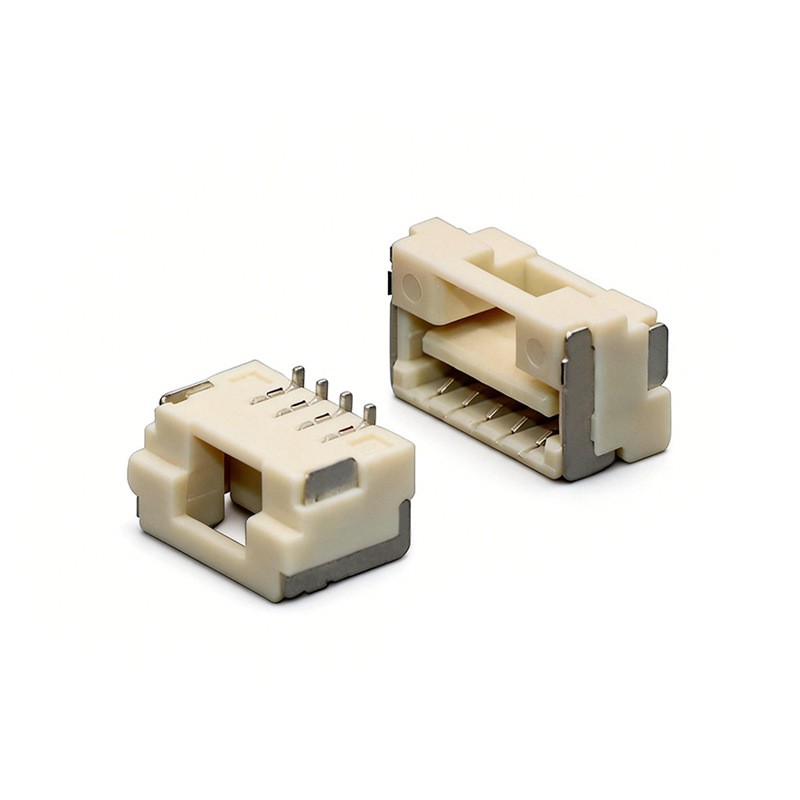
If you’re in the market for high – quality electronic connectors, we’re here to help. Our connectors are rigorously tested using all the equipment I’ve mentioned above. We’re committed to providing you with connectors that are reliable, durable, and perform well in any application.
Wire-to-Board Connector Whether you need connectors for a small – scale project or a large – scale industrial application, we’ve got you covered. Don’t hesitate to reach out to us to discuss your specific requirements. We’re always happy to have a chat and find the best connector solutions for you.
References
- Grob, Bernard. "Introduction to Electronics." McGraw – Hill Education.
- Boylestad, Robert L., and Nashelsky, Louis. "Electronic Devices and Circuit Theory." Pearson.
Wenzhou JKUN Connector Co., Ltd.
As one of the most professional electronic connector manufacturers and suppliers in China, we’re featured by quality products and low price. Please rest assured to wholesale bulk customized electronic connector from our factory. For quotation and free sample, contact us now.
Address: No.2667, Ningkang East Road, Yueqing City, Zhejiang Province, China
E-mail: sales@cnjkun.com
WebSite: https://www.jkunjcj.com/
