Hey guys, if you’re in the tattoo game—whether you’re a new artist just setting up your station or a seasoned pro looking to upgrade your gear—you’ve probably stared at wireless tattoo machine price tags and wondered: why is one $150, another $600, and why the hell is that top-tier one over $1,000? As a wireless tattoo machine supplier who’s been in this space for a minute, I’ve fielded this question so many times I can probably answer it in my sleep. It’s not just a “brand markup” thing, either—there’s actual, science-backed reasons a machine’s price ties straight to the features that matter most to how you work, how long your gear lasts, and even how your clients feel about the process. Let’s break this down like we’re hanging out backstage after a tattoo convention, no boring whitepapers here. Wireless Tattoo Machine
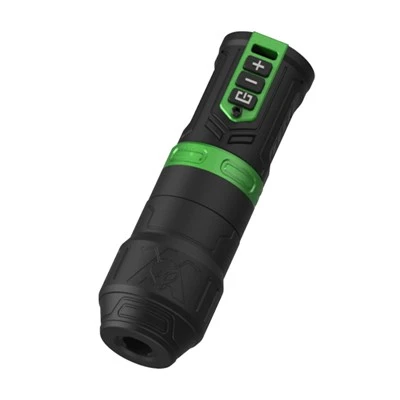
First off, let’s get one thing straight: a wireless tattoo machine’s core is its motor, and that’s the biggest driver of price. Wait, not just any motor—we’re talking brushless vs. brushed motors, and that’s a game-changer. Brushed motors are the old-school, cheaper ones you’ll find in budget machines, right? They work by using small carbon brushes to transfer power to the spinning armature, but those brushes wear out super fast—like, 500 to 1,000 hours of use max. If you’re grinding 30+ hours a week tattooing, that’s maybe 3 months before you’re swapping out a $20 brush kit. Brushless motors? They don’t have those brushes—they use magnets to transfer power, which means way less friction and way longer lifespan. Top-tier brushless motors can last 10,000+ hours, which is like 5 years of full-time use no hassle. But here’s the thing: brushless motors also have more consistent power output, even when the battery gets low. A budget brushed motor will sputter or slow down as the battery dies, which throws off your line work or shading. I’ve seen new artists grab a $120 wireless machine for a first kit, only to panic mid-tattoo when their lines get jagged because the motor’s dying. That’s the trade-off, and it’s why a machine with a solid brushless motor is gonna cost you more—you’re paying for reliability, not just “wireless.”
Next up, battery tech. Wireless machines run on lithium-ion batteries, but not all lithium-ion is created equal. A budget machine might use a 1,200 mAh battery that only lasts 1 hour of continuous use, and it takes 2 hours to charge—so if you’re doing a full back piece, you’re carrying a spare battery in your pocket just to make it through. Mid-range machines bump that up to 1,800 mAh, which gets you 2-3 hours, but high-end pro models use high-density 2,500+ mAh lithium-polymer batteries that last 4-6 hours on a single charge. But wait, there’s more: battery management systems (BMS). The BMS is the tiny circuit board that keeps your battery from overheating, overcharging, or dying unexpectedly mid-tattoo. Cheap machines skip the proper BMS to cut costs, which means you’re risking battery swelling (yes, that’s a real thing— I’ve had a client’s $100 machine swell so bad it wouldn’t fit in their grip) or even fire hazards if you leave it charging overnight. Pro machines have built-in smart BMS that automatically adjust power, stop charging once full, and even show you a precise battery percentage (not that vague 1-5 bar indicator that’s always wrong). That BMS isn’t just a “nice feature”—it’s safety, and it adds to the price.
Then there’s build quality and ergonomics, which you’ll notice the second you pick up a $200 machine vs. a $700 one. Budget machines are usually made from cheap plastic or soft aluminum that bends or scratches after a few uses— I’ve seen a plastic grip snap mid-outline on a client’s arm, which had to pause the whole tattoo. Mid-range machines use anodized aluminum, which is way more durable and corrosion-resistant, and top pro models use titanium alloy for the grip and body. Titanium is lightweight, so you can hold it for 8 hours straight without your hand cramping, but it’s also more expensive to machine than aluminum. Also, the weight distribution: cheap machines are all heavy in the back, so you’re pushing against it instead of gliding, which leads to uneven lines and more hand fatigue. Pro machines balance the weight right over the needle bar, so you control it with your wrist, not your shoulder. That’s not a trivial design choice—good ergonomics directly reduce artist burnout and improve tattoo quality, so that’s another cost that gets passed on, and it’s worth every penny if you’re doing this full-time.
Wait, let’s talk about needle compatibility too, because that’s a feature a lot of new artists sleep on. Some budget wireless machines only work with specific, cheap needles that you can only buy from the machine’s brand, so you’re paying a markup on needles every time you restock. Mid-range machines have a standard universal needle interface, so you can use any brand of needles you trust—round liners, mag shaders, whatever. High-end pro machines have a quick-connect system that lets you swap needles in 2 seconds flat, no tools, which saves you so much time between clients. I once had an artist swap a needle mid-tattoo and take 5 minutes because their machine needed a Allen wrench—they rushed it, nicked the client, and ended up giving a free touch-up. The quick-connect feature isn’t just convenience; it cuts down on mistakes, which is why it’s a premium add-on that makes the price go up.
Now, let’s bust a common myth: more expensive doesn’t always mean “better” for every artist. If you’re a part-time artist who does 2-3 small tattoos a week, a mid-range machine with a brushless motor and 1,800 mAh battery might be perfect for you—you don’t need that 6-hour battery for a 1-hour tattoo. But if you’re doing 40+ hours a week, big pieces, traveling to conventions, or working in a high-volume studio, the extra cost of a pro machine saves you money in the long run. You’re not buying a machine that breaks every 6 months—you’re buying one that lasts 5 years, doesn’t sputter mid-tattoo, and reduces hand fatigue so you can keep working without burning out.
As a wireless tattoo machine supplier, I tell new artists all the time: don’t just chase the cheapest price, and don’t overspend on features you’ll never use. The sweet spot for most part-timers is mid-range, which balances solid features (brushless motor, decent battery, universal needles) without the pro markup. For full-time artists, the extra cost is worth it for the durability and consistent performance.

If you’re ready to find a wireless machine that fits your workflow, whether you’re just starting out or leveling up your gear, feel free to reach out to chat through what you need. We can walk through the specs, compare price points, and make sure you’re not wasting money on features you don’t care about.
Tattoo Motor References
- National Tattoo Association. (2022). Equipment Durability and Artist Workflow Study.
- Journal of Dental and Medical Engineering. (2021). Design and Performance Analysis of Brushless vs. Brushed Motors for Portable Handheld Tools.
- Lithium-Ion Battery Association. (2023). Safety Standards for Portable Power Tools, Section 4: Battery Management Systems.
- Tattoo Artists’ Guild International. (2022). Ergonomics in Tattoo Equipment: Reducing Musculoskeletal Strain.
Zhuji Taituo Machinery Technology Co., Ltd.
Zhuji Taituo Machinery Technology Co., Ltd. is one of the best wireless tattoo machine manufacturers and suppliers in China for over 20 years, also supports customized service. Welcome to buy advanced wireless tattoo machine made in China here and get quotation from our factory. For price consultation, contact us.
Address: 101, Building 12, Youdi, No. 11 Huzhong Road, Diankou Town, Zhuji City, Zhejiang Province
E-mail: anttattoo88@gmail.com
WebSite: https://www.antinktattoo.com/
