Hey there, fellow car lovers and part-time tinkerers! Today we’re diving into a question we get at our shop like, every single week—"Can I upgrade the lighting in my car interior components?" Let’s cut the stuffy jargon, skip the overcomplicated manuals, and get real about this. As a car interior components supplier, we work with everything from tiny dash trim panels to full door card assemblies, so we’ve seen it all: folks who want just a little extra footwell glow, people whose broken map lights have been bugging them for months, and even a few that tried a sketchy YouTube hack and ended up with a flickering nightmare. Let’s break down if this upgrade is doable, what actually works (and what to avoid), and when it’s better to leave it to the pros. Car Interior Components
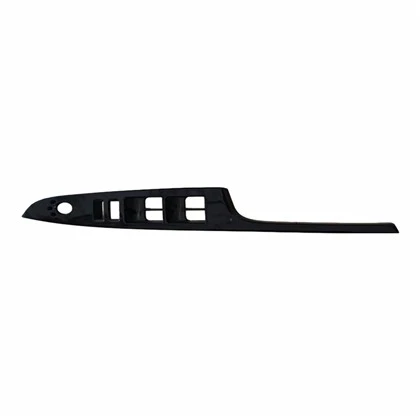
First off, let’s get one thing straight: Yes, you absolutely can upgrade your car’s interior lighting components—no matter if you drive a 10-year-old Honda Civic or a brand-new electric SUV. The trick is knowing what parts of the interior you’re messing with, how the factory wiring works, and how to avoid turning your car into a fire hazard (yes, that’s a real risk if you skip basic safety). Let’s start with the most popular interior components people want to upgrade: door cards, dash trim, footwells, map lights, and center consoles. Each of these has its own little quirks, so we’ll go one by one.
Door cards are probably the most common spot people tackle, and honestly, they’re pretty straightforward. Most factory door lights are either tiny incandescents (you know, the ones that burn out way too fast) or basic LEDs that are just… boring. The key here is checking how the door light is wired—usually, it’s triggered by the door latch, so power flows when the door opens. Upgrading here means swapping out the factory bulb for an LED that fits the exact socket. Wait, hold up—don’t just grab any LED from the auto parts store. Some bulbs are designed for specific voltage, and using the wrong one can throw off your car’s body control module (BCM). That’s the computer that runs all your interior electronics, and if it gets confused, you might get random warning lights, a dead battery, or even the interior lights staying on all night. We’ve had customers come to us with that exact problem: they put in a $5 LED that didn’t match the factory resistance, and their door ajar light stayed on permanently. Total headache. So when upgrading door cards, always check the socket type (most common are T10, 194, or 7443) and look for LEDs that are specifically calibrated for automotive use—they have the right resistor built in, so they won’t mess with the BCM.
Next up, dash trim. This one is a little trickier because some newer cars have dash lights that tie into the dimmer switch. If you try to put a super bright LED here, it might be too bright when the dimmer is turned low, or it could cause the dash lights to flicker. We’ve found that many of our customers want to add ambient lighting strips to their dash, not just swap the factory bulbs. That’s totally doable too, but you have to run the wiring correctly. Don’t tap into the dash’s power directly—use a fuse tap that’s rated for the right amperage. Ambient light strips are low-wattage, so a 5A or 10A fuse is more than enough. Also, make sure to tuck all the wiring away so it doesn’t rub on any sharp metal edges—those can fray the insulation and cause a short. We had one guy a few months back that skipped tucking his wires, and after a few months of driving, a frayed wire touched the metal dash bracket and blew a fuse. Luckily, he caught it before anything worse happened, but it’s a silly mistake that’s totally avoidable.
Footwell lighting is another fan favorite, and this is where people get creative. Some want subtle white glow that’s not distracting while driving, others want RGB strips that change color to match their music. Here’s the thing with RGB: if you go the cheap route, they might not sync right, or the remote might die after a week. We supply custom RGB footwell kits that are wired to your car’s power, so they turn on/off with the interior lights automatically—no messing with remotes. A lot of folks ask if they can install these themselves, and the answer is yes, but again, wiring is key. Run the wires along the edge of the carpet or under the trim (you just pop that off with a trim tool, no prying with a screwdriver that will scratch the plastic) and connect them to the factory interior light circuit. That way, when you unlock your car, the footwells light up—super handy if you’re digging for keys in a dark parking lot.
Map lights and dome lights are the simplest upgrade, honestly. Most of these are T10 or 194 bulbs, and swapping the incandescent for an LED will make a huge difference. Incandescents put out a warm, yellow light that’s dim, while LEDs are bright, white, and use way less power. We tell people to go for 3000K to 4000K color temperature—anything higher (like 6000K) is too blue, and can be harsh on your eyes at night. Pro tip: If your map light has a lens, make sure the LED isn’t so big that it blocks the lens—you’ll get dim light spots instead of even glow. We once had a customer that bought an LED that was twice as big as the factory bulb, so he had to sand down the plastic lens a little to make it fit. That’s extra work, so just check the bulb dimensions before you buy.
Now, let’s talk about when you might want to call a pro instead of doing it yourself. If you have a newer car (2018 and up), especially an electric or hybrid, the interior components are super integrated with the car’s electronics. Messing with the wiring here could trigger a BCM fault that requires a dealer to reset, which is not cheap. We had a customer with a Tesla Model 3 that tried to add ambient lighting to the center console, and he accidentally tapped into the high-voltage system. Luckily, he didn’t get hurt, but his car’s infotainment screen went dark for a week, and he had to pay $800 to fix it. Yeah, that’s not worth saving $50 on a DIY kit. Another time to call a pro is if you’re modifying custom interior components—like if you’re building a custom center console from scratch and want to integrate lighting into it. We do custom lighting integration for our clients, and we make sure every wire is tucked, every connection is secure, and it all works with the car’s existing systems.
Wait, let’s also bust a common myth here: upgrading your interior lighting won’t drain your battery—at least not if you do it right. LEDs use way less power than incandescents, so even if you leave them on for a few hours, they won’t kill your battery. But if you buy a cheap LED that draws too much current, that’s when you have problems. That’s why we always recommend sourcing parts from a reputable interior components supplier—we test every LED and lighting kit to make sure they’re safe for automotive use. No more guesswork, no more blowing fuses, no more dead batteries.
Another thing to consider: warranty. If your car is still under factory warranty, messing with the interior wiring might void it. That’s a big one. We had a customer that tried to upgrade his dash lights, and a short he caused fried the dashboard computer. The dealer refused to cover it under warranty, so he had to pay $1,500 for a new computer. Lesson learned: always check your car’s warranty terms before you start any electrical work. If you’re not sure, reach out to a professional or a reputable supplier like us—we can help you figure out if your upgrade will impact your warranty, and what parts are safe to use.
Now, what about the fun stuff? If you want to take it a step further, you can upgrade things like the trunk light, glove box light, or even the vanity mirror lights. Trunk light is a great one—most factory trunk lights are tiny, so swapping to a bright LED makes it way easier to find your spare tire or groceries at night. Glove box light is another small upgrade that makes a big difference—no more digging in the dark for your owner’s manual or sunglasses. We even have clients that add accent lighting to the steering wheel trim, which is super subtle but makes the interior feel way more modern.
Let’s get real about the downsides, too. Even if you do everything right, sometimes LEDs can cause glare. If you’re driving at night and the footwell lights are too bright, they can reflect off the windshield and distract you. That’s why we suggest dimmable ambient lighting kits—so you can adjust the brightness to your liking, whether you’re parking at the grocery store or driving on a dark highway. Also, cheap LED kits can flicker, especially when connected to the factory circuit. That’s because they don’t have the right resistor to match the car’s power supply. Again, that’s where buying from a reputable supplier pays off—our lighting kits have built-in resistors, so no flickering, no weird electrical issues.
So, to circle back to the original question: Can I upgrade the lighting in my car interior components? The short answer is yes, but it depends on what you’re modifying, how you do it, and what parts you use. Basic bulb swaps (map lights, dome lights) are totally doable for most people with a screwdriver and a few minutes of time. Ambient lighting strips for door cards or footwells are manageable, as long you take your time with the wiring. But if you’re modifying newer cars, high-voltage components, or custom interior builds, it’s better to work with a professional who knows what they’re doing.
At the end of the day, upgrading your car’s interior lighting is all about making your ride feel more comfortable, functional, and personal. Whether you want brighter map lights so you can read your book at night, subtle ambient glow for those late-night drives, or something that makes your car stand out from the rest, there’s a way to do it safely and right.
If you’re thinking about upgrading your interior lighting components and want to make sure you’re getting the right parts, no sketchy hacks, no electrical headaches, reach out to us to talk through your project. We’re here to help you figure out what works for your car, whether it’s a simple bulb swap or a full custom ambient lighting setup.
License Plate Systems References:
- Society of Automotive Engineers. (2021). Automotive Interior Lighting Standards: Voltage Compatibility and Electrical Safety for Aftermarket Upgrades.
- National Highway Traffic Safety Administration. (2022). Vehicle Electrical System Modifications: Risks and Best Practices for Consumers.
- Automotive Aftermarket Suppliers Association. (2023). Guide to Choosing Automotive-Approved LED Bulbs and Lighting Kits.
Hebei Xiujie Auto Parts Co., Ltd.
As one of the most professional car interior components manufacturers and suppliers in China, we have world-leading production equipment and strong manufacturing capabilities. Please feel free to wholesale bulk customized car interior components from our factory. Contact us for quotation and free sample.
Address: Industrial New Area, Wen’an County, Langfang City, Hebei Province (State-run Xiaowu Farm)
E-mail: runtaoli87@gmail.com
WebSite: https://www.xiujie-cn.com/
