If you’ve ever worked in construction machinery, material handling, agriculture, or any industrial sector that relies on motion controlled by hydraulic power, you know how often a poorly matched hydraulic motor can turn a routine job into a headache. A few years back, we had a customer running a small snow blower attachment for a municipal plow truck. They swapped out their original motor for a cheaper, off-the-shelf model to cut costs, and within a week the new unit burned out. When they reached out to us, we pulled up their application details—required torque, operating speed, duty cycle, and even the ambient temperature they worked in—and matched them to an OGM hydraulic motor built exactly for that small, cyclic load. That motor’s still running, three winters later. It’s the kind of outcome that stays with us, because selecting the right hydraulic motor isn’t just about checking specs on a page; it’s about understanding your unique application, and how OGM motors are engineered to solve specific pain points. OGM Hydraulic Motor

Let’s start with the basics: what makes OGM hydraulic motors different from other types on the market. OGM stands for “Orbit Gerotor Motor,” a design that uses an eccentric orbiting gerotor set to generate torque. Unlike bent-axis or gear motors, OGM models offer compact size, smooth low-speed operation, and high starting torque—qualities that make them ideal for applications where space is tight, precision matters, and you need to move heavy loads without ramping up pressure too fast. But even with that base design, not all OGM motors are the same. Picking the right one means narrowing down a handful of non-negotiable factors, then aligning those with OGM’s product line.
The first step is mapping your application’s core requirements. Skipping this step is where most buyers go wrong. A friend of ours owns a forklift repair shop, and last year a fleet manager came in asking for the fastest OGM motor possible for their warehouse pallet jacks. The fleet was running 8-hour shifts, moving pallets full of steel, and they thought more speed would boost productivity. We tested their current setup: the motor was running at 1800 RPM, but it was only generating 120 Nm of torque—barely enough to move a full pallet up a 1% ramp. They swapped for a high-speed OGM motor, but it only put out 80 Nm. Within two months, three motors had seized, because the high-speed unit couldn’t handle the constant heavy loads and slow ramps. That’s why we always start with torque and speed, the two non-negotiables.
Torque is the amount of rotational force the motor needs to move your load. If you’re powering a conveyor that moves heavy construction materials, you need high starting torque—this is the force required to get the load moving from a stop, when static friction is highest. For a material handling robot that moves delicate electronics, you need lower torque but very consistent, smooth operation to avoid damaging goods. OGM motors are rated by their displacement (the volume of fluid they use per revolution), which directly ties to torque: larger displacement equals higher torque, all else being equal. We recommend calculating your required torque with a 20% safety margin. Why? Hydraulic systems often have pressure drops from hoses, filters, or worn pumps, so a little extra torque ensures your motor doesn’t stall under load. For that municipal snow blower, the original motor was rated for 100 Nm, but we specified an OGM model with 120 Nm—enough to clear slush without straining in the cold.
Next, speed. Speed is how fast the motor rotates, measured in RPM, and it’s tied to your application’s cycle time. A lawn mower attachment for a riding tractor needs high speed (around 2000 RPM) to spin the blades fast enough to cut grass, while a drill for digging fence post holes needs low speed (50–200 RPM) to generate high torque to turn the auger. OGM motors are built with different displacement options, so you can trade speed for torque. If you need more speed, pick a smaller displacement OGM motor; if you need more torque, go larger. We always ask customers to calculate their ideal speed, then add a 10% buffer. For the snow blower, the customer wanted 1500 RPM, but we went with a unit rated for 1600 RPM to account for hydraulic fluid viscosity changes in sub-zero temperatures, which can slow the motor down.
Once you’ve locked in torque and speed, the next factor is duty cycle. Duty cycle is how long the motor runs in a given period—25% (cyclic, short runs), 50% (intermittent, work and rest periods), 100% (continuous, 24/7 operation). OGM motors are rated for different duty cycles, and mixing them up leads to overheating and early failure. Take that 24/7 conveyor in a mining operation: it runs non-stop, moving ore from a mine shaft to processing. A standard OGM motor rated for 50% duty cycle would overheat within hours, because it can’t dissipate heat fast enough. We’d recommend a heavy-duty OGM model with a cast iron housing, larger heat exchangers, and internal fluid passages that keep the gerotor set cool during continuous operation. On the other end, a 25% duty cycle for a temporary construction winch? A standard OGM motor works perfectly—it’s cheaper, lighter, and built for short, intense loads.
Ambient and operating conditions are another make-or-break factor. If your motor runs in temperatures below freezing (like that snow blower) or above 120°F (like a asphalt paving machine’s hydraulic system), standard OGM motors might not work. Hydraulic fluid viscosity changes with temperature: in cold, fluid thickens, so you need a motor with tighter gerotor clearances to handle high pressure without wear. In heat, fluid thins, so you need a motor with better sealing to prevent internal leaks and maintain torque. We also consider exposure to moisture, dust, or chemicals: OGM motors come with different shaft seal options—standard lip seals for indoor use, heavy-duty double-lip seals for outdoor construction, and chemical-resistant seals for agricultural equipment that gets sprayed with fertilizers. Last year, a customer in Florida used a standard OGM motor on their citrus harvester; the salt air corroded the internal bearings, and the motor died. We switched them to a corrosion-resistant OGM model with zinc-plated components, and it’s still running after two harvest seasons.
Mounting and integration details are often overlooked, but they can derail a project. OGM motors use standard mounting flanges (like SAE A, B, or C) and shaft configurations (keyed, splined, tapered) to fit most systems, but mis-mounting leads to vibration, leaks, and premature failure. For example, a customer putting an OGM motor on a skid-steer loader used a flange that was slightly too small, leading to misalignment between the motor and the drive shaft. Within a month, the gerotor set had worn out. We always ask for CAD files of the mounting area, or a photo of the current motor, to confirm fit. We also offer options for differential porting, which lets you adjust flow direction for bidirectional motion—critical for applications like lifts or winches that need to move in two directions.
Now, what about long-term costs? It’s easy to go for the cheapest OGM motor, but that’s a short-sighted choice. A high-quality OGM motor might cost 15% more upfront, but it will last two or three times longer, reducing downtime and replacement costs. We saw this with a small agricultural operation that tried a budget OGM motor for their hay baler: it cost $200 less, but it burned out after 3 months. They ended up buying three more in a year, totaling $900, vs. the $300 we quoted them for a heavy-duty OGM model that’s still running after 18 months. That’s why we always emphasize total cost of ownership, not just upfront price.
If you’re still not sure which OGM motor is right for your application, here’s a quick checklist to walk through:
- Calculate required torque (add 20% safety margin) and maximum speed (add 10% buffer).
- Note your duty cycle (25%, 50%, or 100%) and required operating hours.
- List ambient conditions: temperature range, exposure to moisture/dust/chemicals.
- Share mounting specs: flange type, shaft size, and any integration needs.
- Confirm your hydraulic system’s pressure and flow rate.
This checklist helps us narrow down the best OGM motor for your needs, instead of pushing a one-size-fits-all model. We’ve worked with everything from small garden tractors to large mining conveyors, and every time, taking the time to go through these steps leads to a solution that works, and works long-term.
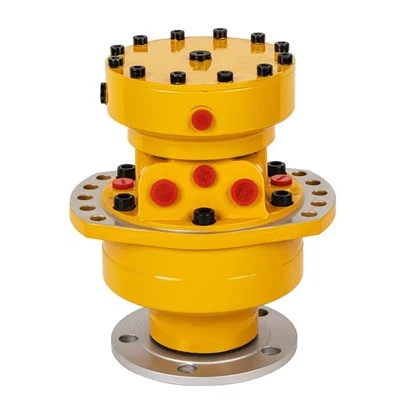
At the end of the day, selecting the right OGM hydraulic motor is about matching a component to your specific needs, not checking a box on a spec sheet. The goal is smooth, reliable motion, whether that’s a snow blower clearing a street, a pallet jack moving a pallet, or a conveyor moving ore. If you’re in the market for an OGM hydraulic motor and want to make sure you pick the right one for your application, reach out to our team to discuss your requirements. We’ll help you find the perfect fit, and back it up with the expertise to keep your equipment running.
Drum Cutter References
- Hydraulic Motor Selection Guide. Fluid Power Society.
- Orbit Gerotor Motor Design and Application. International Journal of Fluid Power, 2021.
- Industrial Hydraulic Systems Best Practices. National Fluid Power Association, 2022.
Ningbo Oushijie Hydraulic Transmission Co., Ltd.
Ningbo Oushijie Hydraulic Transmission Co., Ltd. is one of the most professional ogm hydraulic motor manufacturers and suppliers in China, also supports customized service. With abundant experience, we warmly welcome you to wholesale durable ogm hydraulic motor at competitive price from our factory.
Address: Changshi Sanxing Industrial Zone, Jiulong Lake Town, Zhenhai District, Ningbo,Zhejiang, China
E-mail: yong@nbosj.com
WebSite: https://www.nbosj.com/
