Are there any environmental impacts of Resin Abrasive Media?
As a supplier of Resin Abrasive Media, I’ve often been asked about the environmental implications of our products. Resin abrasive media is widely used in various industries for surface finishing, cleaning, and deburring. It offers several advantages such as high cutting efficiency, long service life, and consistent performance. However, like any industrial product, it’s essential to understand its environmental impacts to make informed decisions. Resin Abrasive Media

1. Raw Material Extraction and Production
The production of resin abrasive media starts with the extraction of raw materials. The primary components typically include abrasive grains (such as aluminum oxide, silicon carbide) and resin binders. The extraction of these raw materials can have environmental consequences.
For abrasive grains, mining operations are required. Mining activities can lead to habitat destruction, soil erosion, and water pollution. For example, open – pit mining of aluminum oxide ore can disrupt large areas of natural landscapes, displacing wildlife and altering the local ecosystem. Additionally, the processing of these ores often involves the use of large amounts of water and energy, which can contribute to water scarcity and increased greenhouse gas emissions.
The resin binders used in resin abrasive media are usually synthetic polymers. The production of these polymers involves complex chemical processes that require significant amounts of fossil fuels. The petrochemical industry, which is the source of many of these raw materials, is a major contributor to air pollution and global warming. During the manufacturing process, volatile organic compounds (VOCs) can be released into the atmosphere, which are harmful to human health and can contribute to the formation of smog.
However, our company is committed to reducing these impacts. We source our raw materials from suppliers who adhere to strict environmental standards. We also invest in research and development to find more sustainable alternatives for both abrasive grains and resin binders. For example, we are exploring the use of recycled abrasive materials and bio – based resins, which can significantly reduce the environmental footprint of our products.
2. Energy Consumption During Production
The production of resin abrasive media is an energy – intensive process. It involves several steps such as mixing the abrasive grains and resin binders, shaping the media, and curing the resin. Each of these steps requires a significant amount of energy, mainly in the form of electricity and heat.
The high energy consumption contributes to greenhouse gas emissions, especially if the energy is sourced from fossil fuels. To address this issue, our company has implemented energy – efficiency measures in our production facilities. We have installed energy – efficient equipment, such as high – efficiency motors and advanced heating systems, to reduce energy consumption. We are also exploring the use of renewable energy sources, such as solar and wind power, to power our production processes.
3. Waste Generation
During the production process, there is inevitably some waste generated. This includes excess raw materials, defective products, and used production equipment. If not properly managed, this waste can have a negative impact on the environment.
Excess raw materials can be a source of pollution if they are not recycled or disposed of correctly. Defective products, which do not meet our quality standards, need to be disposed of in an environmentally friendly way. Our company has established a comprehensive waste management system. We recycle as much of the excess raw materials as possible, and defective products are either re – processed or sent to specialized waste treatment facilities.
In addition, the end – of – life disposal of resin abrasive media is also a concern. Once the media has reached the end of its useful life, it needs to be disposed of. Traditional disposal methods, such as landfilling, can take up valuable land space and may release harmful substances into the soil and groundwater over time. To mitigate this, we are promoting the recycling of used resin abrasive media. We have developed a recycling program that allows our customers to return their used media to us. We then process the used media to extract the valuable abrasive grains and reuse them in the production of new media.
4. Air and Water Pollution
During the use of resin abrasive media, there is a potential for air and water pollution. When the media is used in abrasive blasting operations, dust particles can be generated. These dust particles may contain abrasive grains, resin fragments, and other contaminants. Inhalation of these dust particles can be harmful to human health, causing respiratory problems such as silicosis.
To prevent air pollution, we recommend the use of proper dust collection systems in abrasive blasting operations. Our company also offers media with low dust generation properties. These media are designed to break down in a way that minimizes the release of fine dust particles into the air.
In terms of water pollution, if the abrasive blasting process is carried out near water sources or if water is used in the process, there is a risk of contaminating the water. The abrasive media and any contaminants removed from the surface being blasted can end up in the water. To address this, we encourage our customers to use water treatment systems to remove the contaminants from the water before discharging it.
5. Positive Environmental Aspects
Despite the potential environmental impacts, resin abrasive media also has some positive environmental aspects. Compared to some traditional abrasive materials, resin abrasive media can be more efficient. This means that less media is required to achieve the same level of surface finishing, which can reduce the overall consumption of raw materials.
In addition, the long service life of resin abrasive media reduces the frequency of replacement. This results in less waste generation over time. Our company’s efforts in promoting recycling and using sustainable raw materials also contribute to a more circular economy, which is beneficial for the environment.
6. Conclusion and Call to Action
In conclusion, resin abrasive media does have some environmental impacts, mainly in the areas of raw material extraction, energy consumption, waste generation, and air and water pollution. However, through responsible sourcing, energy – efficiency measures, waste management, and pollution prevention, these impacts can be minimized.
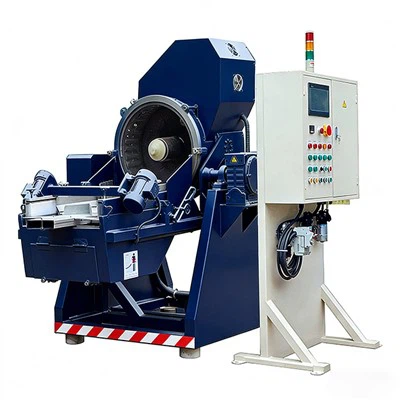
Magnetic Polishing Machine As a supplier, we are committed to continuously improving the environmental performance of our products. We believe that by working together with our customers, we can achieve a more sustainable future. If you are interested in learning more about our resin abrasive media and our environmental initiatives, or if you are considering purchasing our products, we encourage you to contact us for a detailed discussion. We are ready to provide you with high – quality products and solutions that meet both your industrial needs and environmental requirements.
References
- "Environmental Impact Assessment of Abrasive Manufacturing Processes" – Journal of Industrial Ecology
- "Sustainable Materials for Abrasive Media" – International Journal of Sustainable Manufacturing
- "Waste Management in the Abrasive Industry" – Waste Management and Research
Dongguan Xindingsheng Intelligent Grinding Technology Co., Ltd.
Dongguan Xindingsheng Intelligent Grinding Technology Co., Ltd. is one of the most reliable resin abrasive media manufacturers and suppliers in China, also supports customized service. Please feel free to wholesale bulk high quality resin abrasive media in stock here from our factory. Contact us for pricelist.
Address: Room 101, Building 1, No. 73 Dahuangmei Road, Dalingshan Town, Dongguan City, Guangdong Province, China
E-mail: cndskj@126.com
WebSite: https://www.xdsfinishing.com/
