In the manufacturing industry, the efficiency and scalability of production equipment are crucial factors that determine a company’s competitiveness. As a supplier of Single Moving Plate Cold Presses, I often encounter a question from potential customers: Can a Single Moving Plate Cold Press be used for mass production? In this blog post, I will delve into this question, exploring the capabilities, limitations, and considerations of using a Single Moving Plate Cold Press in a mass – production environment. Single Moving Plate Cold Press
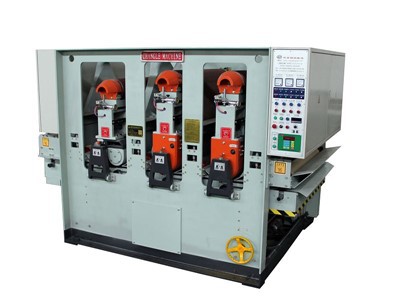
Understanding the Single Moving Plate Cold Press
Before discussing its suitability for mass production, it’s essential to understand what a Single Moving Plate Cold Press is. A Single Moving Plate Cold Press is a type of press machine where one plate moves while the other remains stationary. It operates at room temperature, applying pressure to materials to shape, compress, or bond them. These presses are commonly used in industries such as woodworking, plastics, rubber, and composite materials manufacturing.
The basic working principle of a Single Moving Plate Cold Press involves placing the material between the two plates. The moving plate then descends, exerting a specific amount of pressure on the material. The pressure is maintained for a set period, allowing the material to take on the desired shape or undergo the necessary bonding process.
Advantages for Mass Production
1. Cost – effectiveness
One of the significant advantages of using a Single Moving Plate Cold Press for mass production is its cost – effectiveness. Compared to some high – tech, multi – function presses, Single Moving Plate Cold Presses are relatively inexpensive to purchase. This lower initial investment makes them an attractive option for small and medium – sized enterprises looking to scale up their production without breaking the bank.
In addition to the purchase cost, the operating cost of a Single Moving Plate Cold Press is also relatively low. It does not require complex heating systems like hot presses, which can save on energy consumption. The maintenance of these presses is also straightforward, with fewer components to replace or repair, further reducing the long – term cost of production.
2. Versatility
Single Moving Plate Cold Presses are highly versatile. They can be used to process a wide range of materials, including different types of wood, plastics, rubber, and composites. This versatility allows manufacturers to use the same press for multiple product lines, increasing the overall efficiency of the production process.
For example, in the woodworking industry, a Single Moving Plate Cold Press can be used to laminate veneers onto wooden boards, create plywood panels, or press wooden parts into specific shapes. In the plastics industry, it can be used to mold plastic sheets or bond plastic components together. This ability to handle different materials and processes makes the press a valuable asset in a mass – production setting.
3. Ease of operation
These presses are relatively easy to operate. The basic functions of the press, such as setting the pressure and the pressing time, can be easily controlled by operators with minimal training. This ease of operation means that manufacturers can quickly train new employees to operate the press, reducing the time and cost associated with labor training.
Moreover, the simplicity of the operation also reduces the risk of human error. With fewer complex controls and procedures, operators are less likely to make mistakes that could lead to product defects or machine breakdowns, ensuring a more stable and efficient mass – production process.
Limitations for Mass Production
1. Production speed
One of the main limitations of using a Single Moving Plate Cold Press for mass production is its relatively slow production speed. Since the press operates in a sequential manner, with one cycle of pressing at a time, it may not be able to keep up with the high – volume demands of large – scale mass production.
For example, in a high – speed manufacturing line where thousands of products need to be produced per hour, a Single Moving Plate Cold Press may become a bottleneck. The time required to load and unload the materials, as well as the pressing time itself, can significantly limit the overall production output.
2. Limited capacity
The capacity of a Single Moving Plate Cold Press is also limited. The size of the plates determines the maximum size of the materials that can be processed. In mass production, where large – scale products or a large number of small products need to be processed simultaneously, the limited capacity of the press may not be sufficient.
For instance, if a manufacturer needs to produce large – sized wooden panels or a large quantity of small plastic parts, they may need to use multiple presses or a press with larger plates, which can increase the cost and space requirements of the production facility.
3. Lack of automation
Most Single Moving Plate Cold Presses are not highly automated. The loading and unloading of materials are often done manually, which can be time – consuming and labor – intensive. In a mass – production environment, where efficiency is key, the lack of automation can lead to reduced productivity and increased labor costs.
Automation can also improve the consistency and quality of the products. Manual operations are more prone to variations in the loading of materials, which can result in inconsistent product quality. Without automation, it may be difficult to achieve the high – quality standards required for mass – produced products.
Considerations for Mass Production
1. Production volume
When considering using a Single Moving Plate Cold Press for mass production, it’s important to assess the production volume requirements. If the production volume is relatively low to medium, a Single Moving Plate Cold Press can be a cost – effective and efficient solution. However, for high – volume production, additional presses or more advanced equipment may be needed.
For example, if a manufacturer needs to produce a few hundred products per day, a Single Moving Plate Cold Press may be sufficient. But if the production volume increases to thousands of products per day, the press may not be able to meet the demand, and the manufacturer may need to invest in multiple presses or a more automated production line.
2. Product type
The type of product being produced also plays a crucial role in determining the suitability of a Single Moving Plate Cold Press for mass production. Some products may require a high degree of precision or specific processing conditions that a Single Moving Plate Cold Press may not be able to provide.
For instance, products with complex shapes or those that require a high – temperature bonding process may not be suitable for a cold press. On the other hand, products such as simple wooden boards, plastic sheets, or rubber gaskets can be effectively produced using a Single Moving Plate Cold Press.
3. Integration with other equipment
To enhance the efficiency of mass production, it’s important to consider how the Single Moving Plate Cold Press can be integrated with other equipment in the production line. For example, automated material handling systems can be used to load and unload materials from the press, reducing the manual labor and increasing the production speed.
In addition, quality control equipment can be integrated with the press to ensure that the products meet the required standards. By integrating the press with other equipment, manufacturers can create a more streamlined and efficient mass – production process.
Conclusion
In conclusion, a Single Moving Plate Cold Press can be used for mass production, but it has its advantages and limitations. Its cost – effectiveness, versatility, and ease of operation make it a viable option for small to medium – scale mass production. However, its relatively slow production speed, limited capacity, and lack of automation may pose challenges for high – volume production.
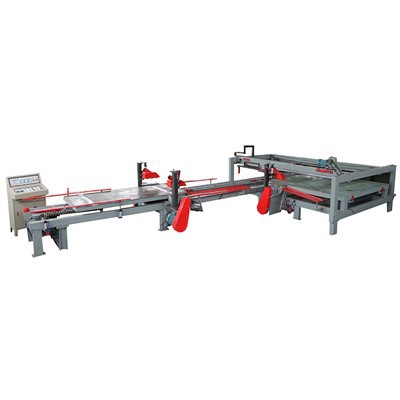
When considering using a Single Moving Plate Cold Press for mass production, manufacturers need to carefully assess their production volume, product type, and the possibility of integrating the press with other equipment. By making an informed decision, they can optimize their production process and achieve the best results.
Sanding Machine If you are interested in exploring how our Single Moving Plate Cold Presses can meet your mass – production needs, we encourage you to reach out to us for a detailed discussion. Our team of experts is ready to provide you with customized solutions and support to help you enhance your production efficiency and competitiveness.
References
- "Press Machines: Types and Applications" – Industrial Press Handbook
- "Cold Pressing Technology in Material Processing" – Journal of Manufacturing Science
Jiashan Changle Machinery Manufacturing Co., Ltd.
We’re well-known as one of the leading single moving plate cold press manufacturers and suppliers in China, also support customized service. Please feel free to buy advanced single moving plate cold press for sale here from our factory. Quality products and punctual delivery are available.
Address: Building 12, Zone A, Wanyang Innovation City, No. 23 Yucao South Road, Ganyao Town, Jiashan County, Jiaxing City, Zhejiang Province
E-mail: Changle84615620@163.com
WebSite: https://www.changlejx.com/
