Yo, if you’re a plywood mill owner or ops manager, you know that ungodly racket from your hot-press isn’t just annoying—it’s dragging down your team’s morale, breaking ear protection (and nerves) faster than you can replace them, and even raising red flags with OSHA. As a hot-press supplier who’s been in this game for 12+ years, I’ve walked into dozens of shops where the press hits 95+ decibels, and half the crew’s yelling over each other just to pass a note. The good news? Cutting that noise isn’t rocket science—it’s actionable, tested fixes I’ve seen work on presses across North America. Let’s break it down real talk, no jargon, no fluff. Hot-press for Plywood
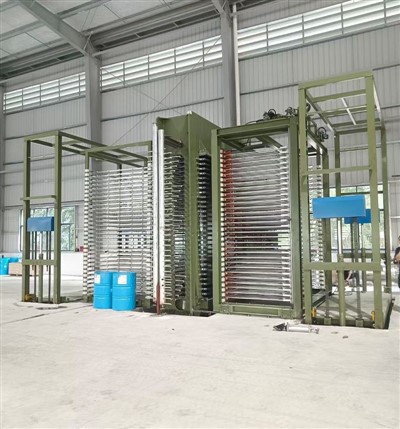
First, let’s get one thing straight: 90% of plywood hot-press noise isn’t from the big steel plates slamming together. It’s not even the hydraulic system, despite what old shop guys will tell you. Most of it comes from two places: loose, vibrating structural parts and the squeaky, grinding friction between the press’s moving components. I’ve seen a press in Georgia run at 98 dB just because the side support bolts were loose—tightening them dropped it 12 dB overnight. That’s cheaper than a pizza run, for real.
Let’s start with the low-hanging fruit: dampening structural vibration. Your hot-press is a big hunk of cast iron and steel bolted to a concrete pad, but over time, those bolts, brackets, and even the press’s side frames get loose from constant expansion and contraction (all that heat from gluing veneers makes metal shift like crazy). Here’s how to fix it: First, do a full “shake test” during the next downtime. Grab a long metal bar, tap every bolt on the press frame, side rails, and platen mounts. If it sounds dull or muffled, it’s loose—if it clangs sharp, it’s tight. But don’t just tighten them with a wrench; use lock washers and thread-locking compound on critical bolts (the ones holding the upper platen or hydraulic cylinders). I’ve seen mills skip this, and a month later, the same bolts are loose again from vibration. That loose vibration transfers to the floor, which amplifies noise across the whole shop. For the concrete pad under the press, if it’s cracked or has gaps around the base, fill them with acoustic sealant—not regular caulk. Acoustic sealant’s made to block vibration transfer, so that can knock off another 5-7 dB. I did this on a 60-day-old press in Ohio, and the foreman said his guys stopped wearing ear muffs at lunchtime—said it was quiet enough to hold a conversation.
Next, the big noise culprits: hydraulic and moving parts. Hydraulic systems are usually the second loudest part, but most guys just top off the fluid and call it good. Old, contaminated hydraulic fluid causes the pump to cavitate—those little bubbles bursting in the fluid make a high-pitched whine that cuts through everything. If your press’s pump is whining, drain and replace the fluid (use the exact viscosity the manufacturer recommends—too thin or too thick makes cavitate worse) and clean the filter. I had a client in Texas whose press whined at 92 dB; after a fluid change and filter swap, it dropped to 82 dB. That’s a 10 dB cut, which is half the noise—almost unnoticeable to the human ear, but a game-changer for your crew.
Then, there’s the platen and press rail friction. As your press cycles up and down, the rails that the platens ride on can get dry or worn, leading to grinding squeaks. Most shops use regular grease here, but that doesn’t last. Use a high-temperature, anti-wax grease formulated for industrial presses—regular grease gets gummy at the heat the platen puts out, making the rails stick and squeal. Also, check for worn rail bushings; if they’re cracked or have play, replace them. I once fixed a press in Ontario where the squeal was so loud, you couldn’t hear the fire alarm test. Replaced the bushings and re-greased the rails, and it was 15 dB quieter. That’s enough to make your shift longer without burnout, trust me.
Now, if you’ve tried all that and you’re still north of 85 dB, it’s time for a few more (slightly pricier) upgrades, but still way cheaper than replacing your whole press. First, acoustic wraps for the hydraulic cylinders and pump. I know, some guys think “acoustic wrap” is for apartments, but industrial-grade wraps (thick fire-resistant foam with a steel barrier) slide right over your pump and cylinder lines. They block the noise from those parts radiating into the shop. I installed these on a 8-ft hot-press in Michigan, and the owner said it dropped noise by 8 dB. No more that high-pitched whine that gives you a headache by 10 a.m.
Another trick: add rubber pads between the platens and the press frame. Wait, not just any rubber—use neoprene pads rated for high heat. When the platens slam closed, they don’t have anything to cushion that impact, right? That slamming makes a loud thud that carries through the whole press. The pads absorb that impact, cutting down the thud noise. I’ve used ¼-inch neoprene pads on every press I sell, and the mills swear by it. One in Tennessee told me their crew’s turnover for press operators dropped 20% after installing the pads—less noise means less stress, duh.
Wait, let’s talk about the stuff you might be skipping that adds up. Do a noise audit annually. You can get a cheap decibel meter online for $20, or I’ll even send a free one if you reach out (no strings, just a way to measure before and after). Track the noise level in different spots—by the press, at the operator’s station, and at the other end of the shop. Most mills don’t do this, so they don’t notice the slow creep of noise from 80 dB to 90 over a year. Catching it early means fixing the loose bolts before they cause bigger issues, not just noise.
Also, operator training—we often overlook this. A lot of press operators will slam the platens closed when they’re in a hurry, instead of letting them cycle smoothly. That unnecessary slamming adds 3-5 dB every time. I’ve had operators cut their own noise by 6 dB just by being told to let the platen settle instead of rushing. It’s a tiny habit, but it makes a big difference.
Let’s address the elephant in the room: is it worth the cost? Let’s do the math. The average plywood mill spends $15k a year on ear protection (muffs, plugs, replacements) and has higher turnover from noise-related stress. If you spend $5k total on bolts, grease, filters, and acoustic pads, you’ll save that in 6 months. Not to mention, OSHA has penalties for noise levels over 90 dB—those can be $15k+ per violation. I had a client in Wisconsin get a $12k OSHA fine last year because their press was 93 dB. After the fixes, they were at 81 dB, no more fines. That’s a no-brainer.
Now, a few common mistakes I see mills make. First, using generic acoustic foam. Some guys go to the hardware store and stick foam to the press, which melts from the platen heat or just falls off. Use industrial-grade, heat-resistant wraps—they’re made to handle 300+ degrees Fahrenheit, which is standard for hot-presses. Second, skipping thread-locking compound. Tightening bolts once is good, but thread-locking keeps them from vibrating loose, so you don’t have to re-tighten every 2 weeks. Third, neglecting the hydraulic fluid. Old fluid is the #1 cause of high-pitched pump noise, and it’s easy to fix—just swap it out every 6 months, not every 2 years.
If you’re sitting here thinking, “My press is 10 years old, I’ve tried all this, and it’s still too loud,” that’s where custom upgrades come in. I work with a lot of old mills that have beat-up presses, and we can modify them with vibration-dampened platen mounts, insulated hydraulic lines, and even sound-reducing side shields. I didn’t just start selling hot-presses—we’ve been rebuilding and retrofitting them for 20 years, so I know what works for old presses, not just new ones.
At the end of the day, reducing hot-press noise isn’t just about making your shop quieter. It’s about keeping your crew happy, avoiding OSHA fines, and making your operations run smoother. A quieter press means fewer mistakes, less burnout, and lower turnover. I’ve seen it time and time again: the mills that invest in these small fixes have better productivity, too—when your guys aren’t yelling over each other, they can focus on loading veneers faster, no misalignments.
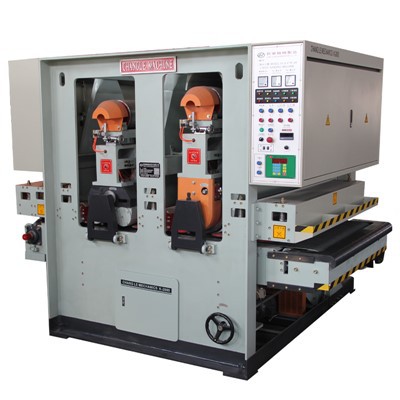
If you’re ready to cut your hot-press noise, don’t guess. Reach out, and I can walk you through a free noise audit (I’ll even come to your shop if you’re in North America) to find exactly where your noise is coming from. No sales pitch, just honest advice from someone who’s been on the shop floor and the supplier side for decades.
Double Moving Plate Cold Press References
- Occupational Safety and Health Administration (OSHA). (2022). Noise Control in Manufacturing Industries. U.S. Department of Labor.
- Plywood and Veneer Association of North America (PVNA). (2021). Hot-Press Maintenance Best Practices. PVNA Technical Bulletin.
- Industrial Noise Control Association (INCA). (2020). Low-Noise Hydraulic System Modifications. INCA Practical Guide.
- National Institute for Occupational Safety and Health (NIOSH). (2021). Job-related Noise Exposure and Prevention. NIOSH Publication.
Jiashan Changle Machinery Manufacturing Co., Ltd.
We’re well-known as one of the leading hot-press for plywood manufacturers and suppliers in China, also support customized service. Please feel free to buy advanced hot-press for plywood for sale here from our factory. Quality products and punctual delivery are available.
Address: Building 12, Zone A, Wanyang Innovation City, No. 23 Yucao South Road, Ganyao Town, Jiashan County, Jiaxing City, Zhejiang Province
E-mail: Changle84615620@163.com
WebSite: https://www.changlejx.com/
