Hey there, if you’ve ever stared at a crisp smartphone screen, flipped through a high-res magazine page, or glanced at a bright, clear LED billboard, you’ve probably interacted with optical grade PET film roll without even realizing it. As someone who’s been in the optical film game for over 7 years—supplying these rolls to manufacturers across consumer tech, displays, and packaging—I get the weirdly specific joy of seeing the stuff I ship turn up in everyday tech people use. A lot of folks reach out asking “wait, what exactly is this stuff used for, anyway?” So let’s break it down, no jargon overload, just real applications that make optical PET roll so non-negotiable right now. Optical Grade PET Film Roll
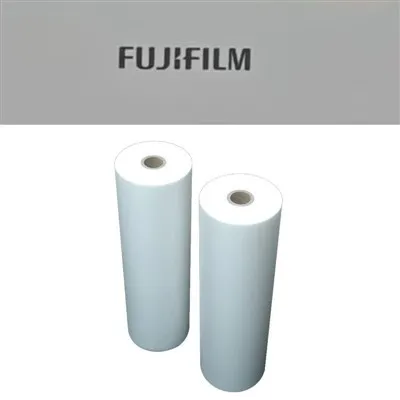
First off, let’s quickly cut through the marketing fluff: optical grade PET (that’s polyethylene terephthalate, but we’re just gonna say optical PET ‘round the office) is a ultra-thin, super uniform plastic film that’s treated to eliminate weird haze, reduce light distortion, and keep light transmission sharp. The key difference between this and the basic PET soda bottle plastic you have at home? We test every roll for consistent thickness (down to microns, basically a millionth of a meter), zero defects like tiny bubbles, and light transmittance that beats most standard plastics. That precision is why it’s not just another plastic—it’s a workhorse for industries that live or die by clarity and performance.
Let’s start with the biggest user right now: display tech. Phones, laptops, tablets, even big-screen TVs—they all rely on layers of optical PET to work. Wait, what part, exactly? Let’s take a smartphone’s touchscreen, for example. Under the glass cover (that Gorilla Glass stuff you hear about), there’s a thin layer of optical PET that acts as the substrate for the touch sensors. The touch sensors are made of transparent conductive material, and PET is the perfect base because it’s flexible, won’t stretch or warp when the phone gets warm (like from being in use), and lets both touch signals and light pass through without mess. I’ve had customers tell me that switching from a cheaper film to our optical PET roll cut their touchscreen error rates by almost 10%—because the cheaper stuff would stretch during manufacturing, making the sensor lines misaligned. For displays, another big use is as a light diffuser in LCD backlights. LED backlights need an even spread of light, not just bright spots in the corners, so optical PET diffusers are layered between the LED panel and the actual display. The film’s micro-textured surface spreads light evenly, and since it’s so clear, you don’t lose brightness in the process. We ship tons of rolls to TV manufacturers in Southeast Asia every month for exactly this—they used to use glass diffusers, but PET is way lighter, which is a big win for reducing TV weight and shipping costs.
Next up: packaging that needs to be both fancy and functional. Wait, packaging? Yeah, not just boxes—think premium food packaging, luxury beauty products, even pharmaceutical blister packs. For food, optical PET film is used as a layer in flexible packaging (like those stand-up snack bags or vacuum-sealed meat packs). Why? It’s oxygen-resistant, so it keeps food fresh longer, and it’s crystal clear, so you can see exactly what’s inside—no murky plastic hiding the product. A lot of craft snack brands hit us up because they want their packaging to look premium without being too bulky; optical PET rolls let them print vivid, sharp logos and product photos that don’t smudge or fade, even after being stacked in a warehouse for months. For pharma, it’s non-negotiable for blister packs (the ones with the plastic bubbles holding pills). The film has to be sterile, completely free of any contaminants that could get into medication, and it’s the only flexible material that’s approved for medical packaging because it won’t react with drugs. I remember once a small biotech company reached out in a panic because their old film supplier had defects that led to packaging rejections—they switched to our optical PET roll, and their rejection rate dropped to zero overnight. That’s the stuff that makes this job worth it.
Another super fast-growing application: solar panels. Wait, solar? You bet. Solar panels need to be durable, let sunlight pass through to the cells underneath, and protect the internal parts from weather—rain, UV, wind. Optical PET film is used both as a backsheet for solar modules and as a protective layer on the front of some smaller, flexible solar panels. The backsheet is the layer on the bottom of the panel that keeps moisture out, and optical PET’s UV resistance means it won’t break down after years of being out in the sun. For flexible solar panels (the ones used on campers or portable chargers), PET is perfect because it’s lightweight and flexible, so it can bend without cracking, unlike glass. We’ve been ramping up production for solar customers over the last 3 years—they’re making more portable solar for outdoor use, and they swear by our film’s ability to hold up in hot, humid climates. I’ve heard horror stories from other suppliers where their PET film would turn yellow after 6 months of sun, which kills solar efficiency—our process eliminates that yellowing, so customers get the full 25+ year lifespan they need.
Wait, let’s not forget about optical components and printing stuff, too. High-quality inkjet printers and laser printers use optical PET film as a transparency base for things like overhead projectors (yes, some offices still use these for presentations!) or custom stencils. The film is so flat and uniform that ink doesn’t bleed or blur, and it’s scratch-resistant so it can be used multiple times. Also, for optical lenses—wait, not the big glasses, but things like camera filters or surveillance lenses—optical PET is used as a coating substrate. The film’s smooth surface lets manufacturers apply anti-glare or UV coatings without any unevenness, which makes the final lens work better. I had a client who makes spy camera filters reach out for a custom width roll—they needed a very narrow, ultra-thin PET film to fit into tiny lens assemblies, and we were able to adjust our production to get exactly what they needed, no defects. That’s the cool part about being a supplier—we can tweak rolls to fit niche needs, not just sell standard sizes.
One thing people always ask: why not use other plastics, like PVC or polypropylene? Well, PVC has toxic chemicals that make it bad for food and medical uses, and polypropylene is too hazy for clarity applications. Optical PET is the sweet spot—non-toxic, clear, durable, and relatively easy to process. The only catch? It has to be made to very tight specs, which is why a lot of cheaper film rolls fall flat. We run each roll through a 5-point inspection: check thickness every inch, test light transmission, scan for bubbles or scratches, make sure it’s UV-resistant, and verify that there’s no static (static is a huge problem for displays—it attracts dust during manufacturing, which ruins parts). That extra step is why our customers keep coming back, even if our price is a little higher than the no-name suppliers.
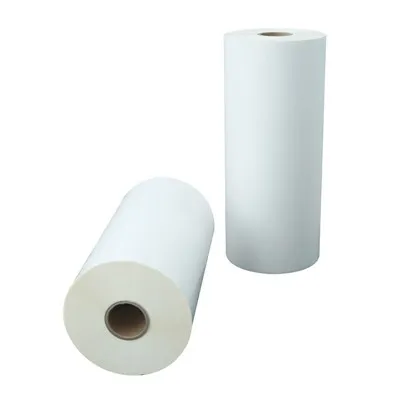
Now, if you’re a manufacturer reading this—whether you’re making phones, solar panels, packaging, or whatever else that needs clear, reliable film—you might be wondering if our optical grade PET film roll is right for you. We do custom widths and thicknesses, we can ship bulk rolls fast, and we work with small startups all the way up to big multinational corporations. If you’ve been dealing with film defects that are slowing down your production or hurting your product quality, hit us up to chat about your needs. No sales pitch, no pressure—just figuring out what you need and if we can deliver.
Digital Thermal Laminaton Film Oh, and quick note: a lot of people mix up optical PET with regular PET, so if you’re ordering for a new project, make sure you specify that it’s for optical applications—cut corners here and you’ll end up with a product that’s blurry or breaks too fast. We’ve seen that mistake too many times, so don’t be that person.
References
- "Polyethylene Terephthalate (PET) Applications in Optical and Display Industries", Society of Plastics Engineers, 2022
- "Optical Grade Films for Photovoltaic Modules", International Renewable Energy Agency (IRENA), 2021
- "Food Contact Materials: Performance Standards for Flexible Packaging Films", FDA Center for Food Safety and Applied Nutrition, 2020
- "Advances in Touch Sensor Substrates: The Role of Polyester Films", Journal of Display Technology, Volume 17, Issue 6, 2021
Yantai Hongqing Packing Material Co., Ltd.
Yantai Hongqing Packing Material Co., Ltd. is one of the most professional optical grade pet film roll manufacturers and suppliers in China, also supports customized service. Welcome to wholesale advanced optical grade pet film roll made in China here and get quotation from our factory. Quality products and reasonable price are available.
Address: Eastern Industrial Park, Taocun, Yantai, Shandong Province, China
E-mail: cindy@ythongguang.cn
WebSite: https://www.hqingnewmat.com/
